

The Low-Income Housing Tax Credit (LIHTC) is the primary tool the federal government uses to boost the supply of affordable rental housing in the US. The credit reduces the cost of construction and rehabilitation of rental housing for tenants with low and moderate incomes.
How? The federal government provides tax credits to allocating agencies (generally state and territorial housing authorities, but also agencies in the cities of Chicago and New York). These agencies distribute the credits to private developers looking to build or renovate affordable housing. Often, developers rely on investors to provide up-front funding. After project completion, those investors can claim LIHTCs to reduce their taxes over a 10-year period.
Is the Low-Income Housing Tax Credit effective?
Enacted in 1986, the LIHTC has helped build and renovate over three million rental housing units. The LIHTC supported one in four new apartments built between 2000 and 2019. It can be especially important in rural areas and communities with lower wealth.
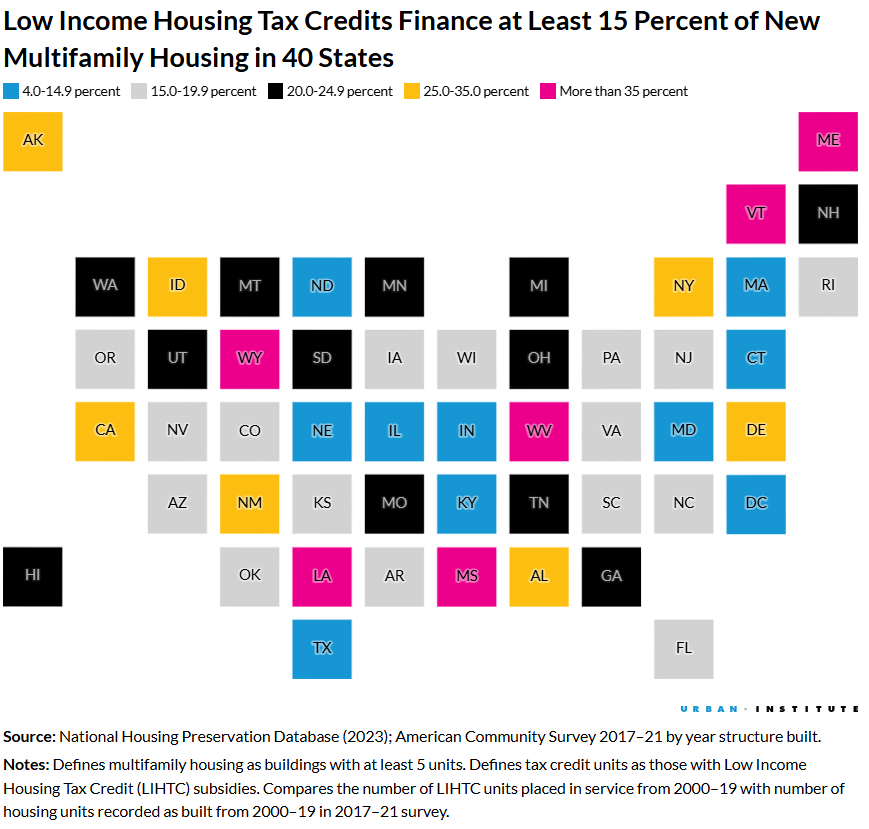
However, the credit is complex. That complexity often means only the most sophisticated investors and their lawyers can make use of the credit. Coupled with limited data and reporting requirements, it also hinders oversight.
The LIHTC is projected to cost $170 billion over the next ten years. Critics question how much the credit subsidizes units that developers would have built anyway and the involvement of various private intermediaries, such as lawyers, syndicators, general partners, managers, and investors.
How could the Low-Income Housing Tax Credit incentivize more affordable housing?
With the US short millions of affordable homes, Congress could increase LIHTC allocations in states where multifamily housing construction is falling behind, focusing on areas with the highest housing cost burdens.
Policymakers could also continue to expand reporting requirements, support more research on how the credit compares to and interacts with other housing programs, and explore ways to best target assistance to communities that need it most.