

The federal government invested $567 billion in children in 2023, with various tax breaks comprising the biggest share of that support. The child tax credit (CTC) is one such tax policy, helping families cover the expenses associated with raising children. As Congress prepares to debate credit reform options in the context of addressing expiring provisions of the 2017 Tax Cuts and Jobs Act, states continue to modify and enhance their own CTCs.
As of April 2025, there were 16 states with CTCs. Twelve were refundable, meaning families could receive a credit that exceeds income taxes owed. Four were nonrefundable, meaning the credit could only be used to offset income taxes owed.
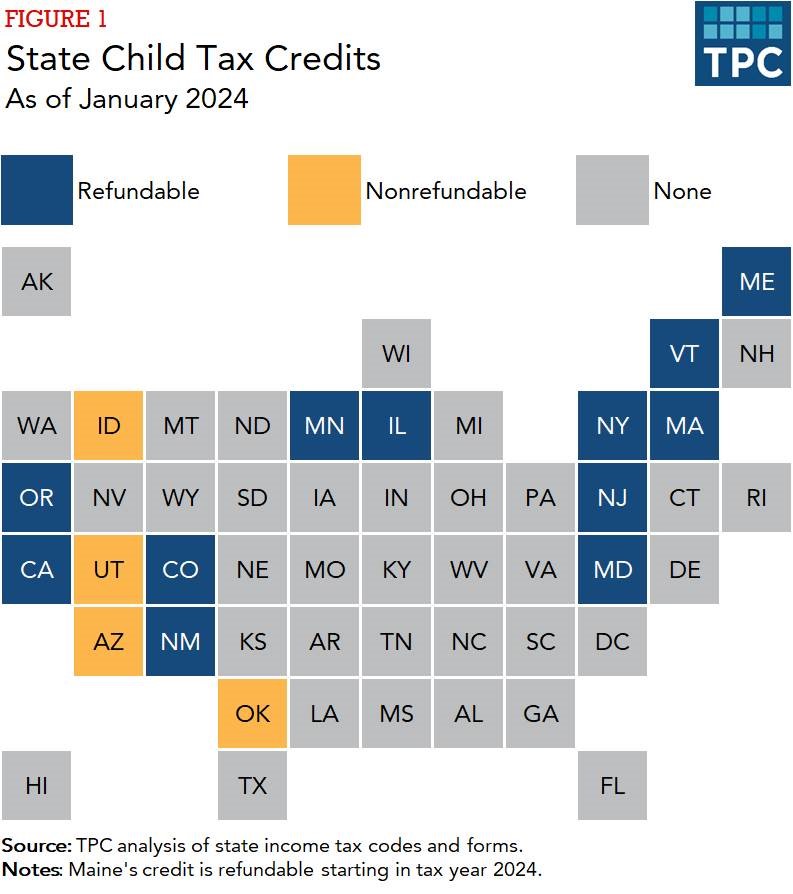
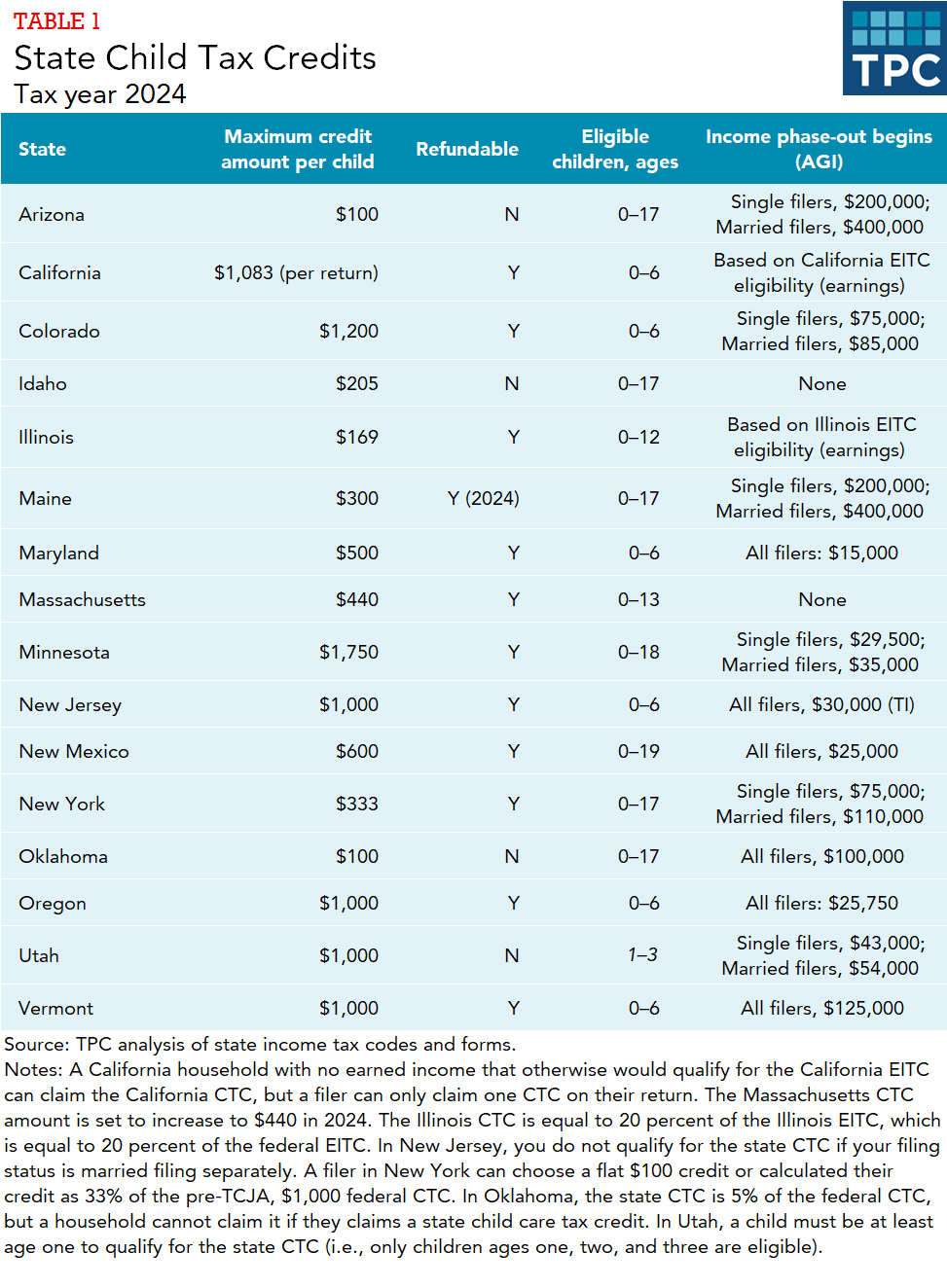
Unlike the state earned income tax credit (EITC), which most states deliver simply as a share of the federal credit, state policymakers have shown a lot of variety when designing their own CTC. State policymakers have varied the credit amount, age eligibility rules for children, income limitations for the filer, and whether or not the credit is refundable (table 1).
To learn more about the child tax credit debate, read our report “Options to Reform the Child Tax Credit in the 2025 Tax Debate” and visit our Briefing Book page “What is the child tax credit?”.
This post has been corrected. In table 1, the maximum credit amount per child in Massachusetts is $440, not $310 (corrected 5/7/2025)