

State and local governments—which include counties, cities, towns, school districts, and special-purpose districts such as transportation or water and sewer authorities—provide many essential goods and services such as education, roads and bridges, subsidized health insurance, and other social safety net programs. To do so, they rely on a mix of their own funds and grants from the federal government.
In 2022, federal grants accounted for an average of 28 percent of state and local budgets, according Census data. State reliance on federal grants varied widely, with at least 30 percent of general state and local revenues coming from federal funds in 22 states. In 2022, Alaska relied on federal grants the most (40 percent of state and local revenues) while North Dakota relied on federal grants the least (20 percent of state and local revenues).
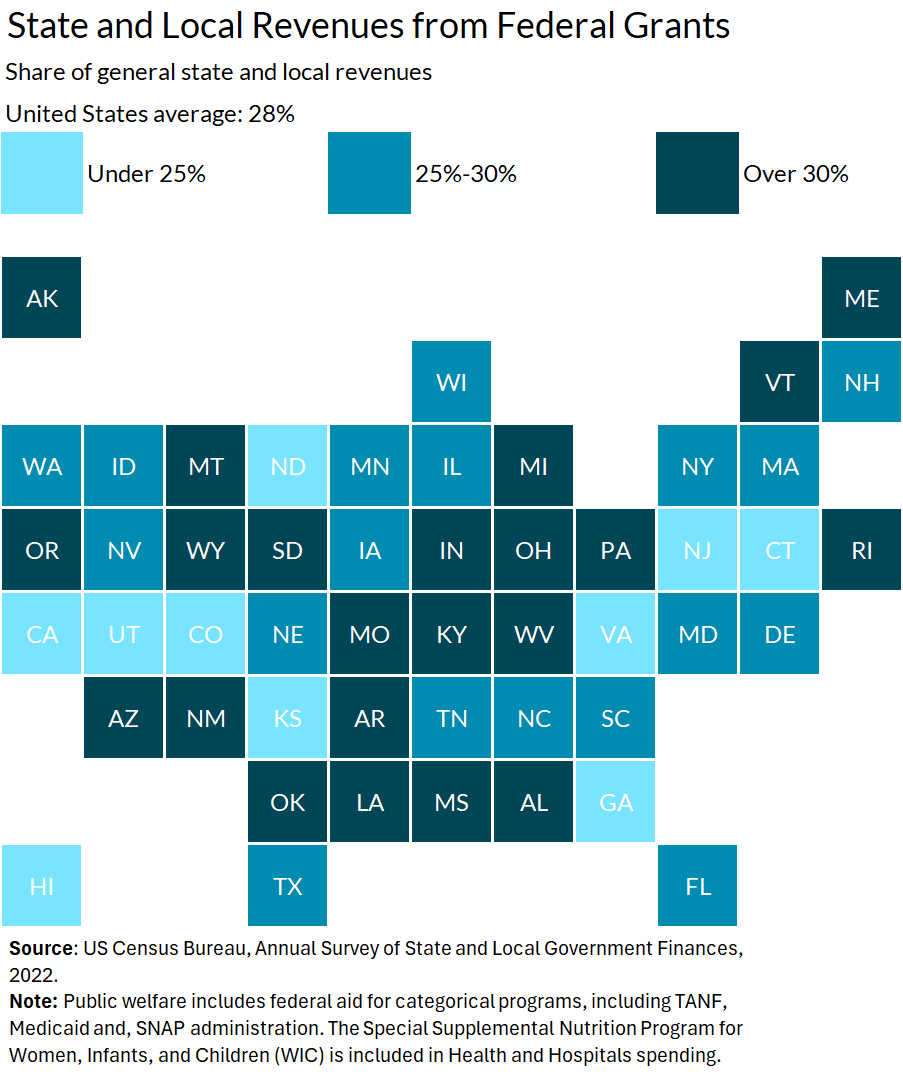
In the median state, federal grants accounted for 28 percent of general state and local revenue in 2022. Alaska had the highest grants as a share of general state and local revenue (40%). North Dakota had the smallest share (20%).
In per capita terms, federal grants averaged $3,774 per person across the country.
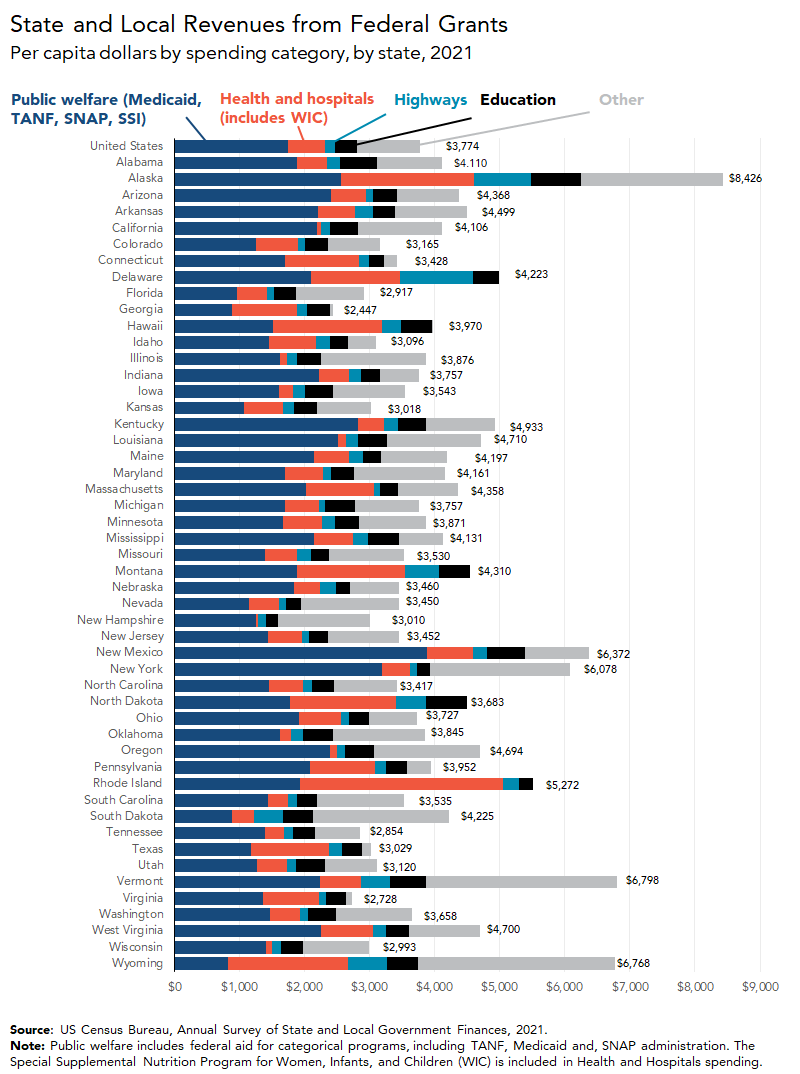
Federal grants specifically support programs like Medicaid, Temporary Assistance for Needy Families (TANF), Supplemental Nutrition Assistance Program (SNAP), Supplemental Security Income (SSI), and Women, Infants and Children (WIC).
They also support highways, education, and other infrastructure (like air transportation, general support, transit, housing and community development, natural resources, sewage).
Learn more about state and local revenues by visiting our briefing book page “What are the sources of revenue for state and local governments?” and state budgets by visiting our “State Fiscal Briefs”.